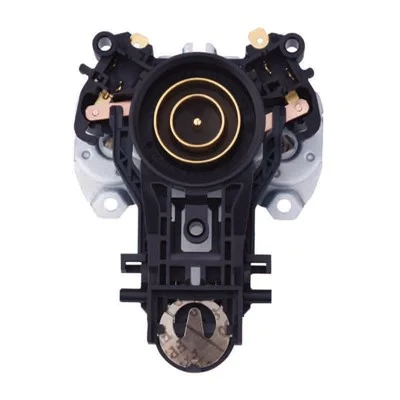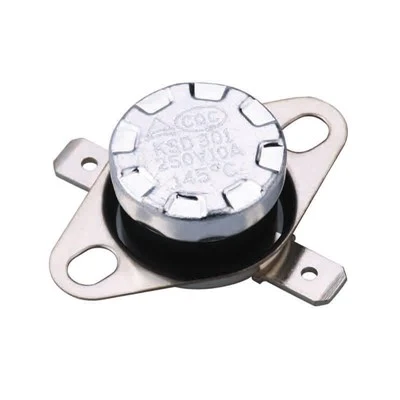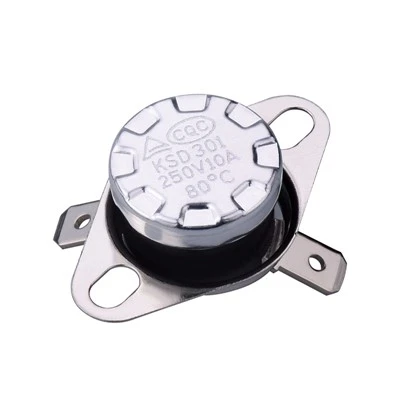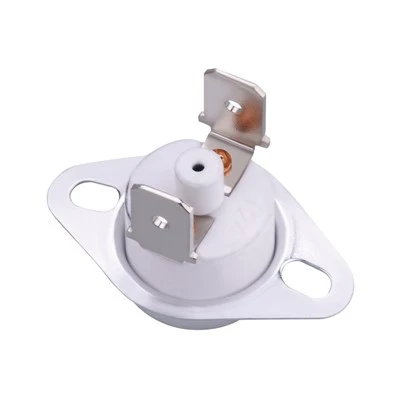

If you’ve ever had an oven that cycles on and off to keep your roast from overheating, or a water heater that shuts down before it gets dangerously hot, chances are a Bakelite body snap action thermostat is working behind the scenes to make that happen. As a supplier of these specialized temperature control components, I get asked one question more than any other: What exactly is the temperature range of a Bakelite body snap action thermostat? It’s a fair question—temperature consistency is non-negotiable for industrial equipment, home appliances, and even some medical devices, and picking the wrong thermostat can lead to costly breakdowns, safety hazards, or simply poor performance. Today, I’m breaking down the science behind Bakelite thermostats, their typical temperature ranges, and how to choose the right one for your application.
First, let’s start with the basics. A snap action thermostat relies on a bimetal disc, a small, thin piece of two different metals bonded together. Different metals expand at different rates when heated, so when the temperature rises, the disc bends, and when it cools, it snaps back. This “snap” is what makes these thermostats so reliable—they activate or deactivate in a split second, no gradual switching that can lead to wear. The body of the thermostat, which houses the bimetal disc and electrical contacts, is where Bakelite comes in. Bakelite is a type of early plastic, invented in the early 1900s, that’s famous for its heat resistance, electrical insulation, and durability. Unlike cheaper plastic alternatives, Bakelite doesn’t warp or melt easily at moderate to high temperatures, making it perfect for thermostats that need to hold up to regular cycling.
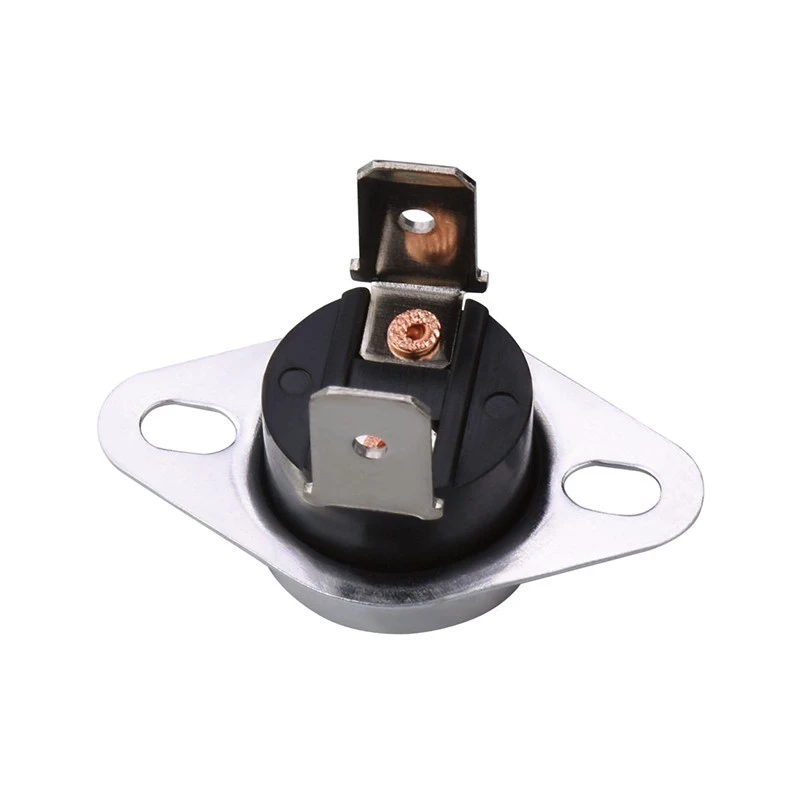
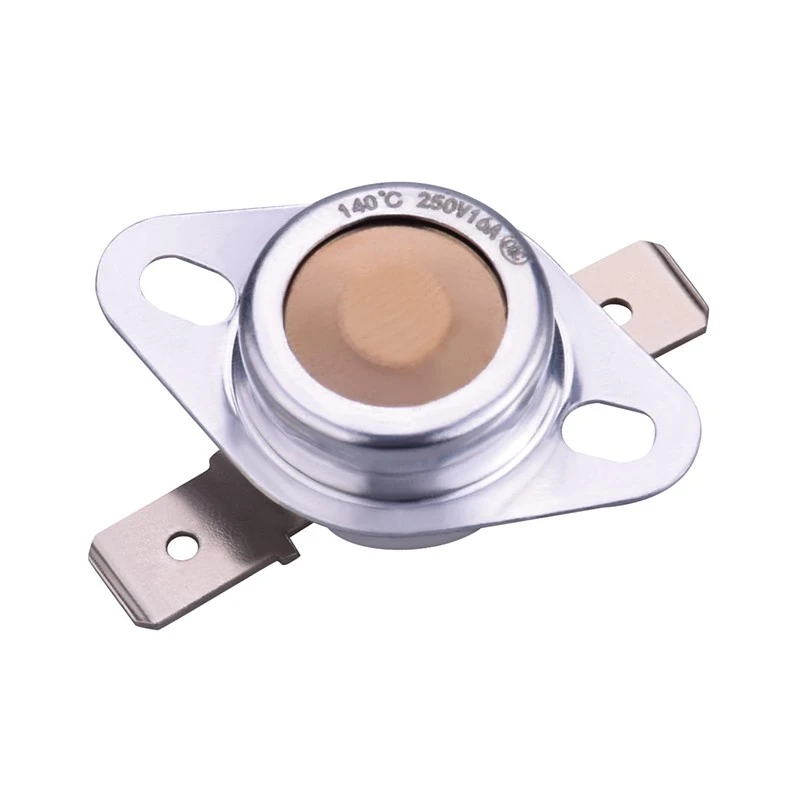
Now, back to the temperature range. This is where it’s important to distinguish between the thermostat’s operating range (the temperatures it can safely handle without breaking down) and its setpoint range (the exact temperatures it’s calibrated to trigger at). For Bakelite body snap action thermostats, the sweet spot is generally between -20°C (-4°F) and 150°C (302°F). Wait, that’s a big range—why such a gap? It all depends on how the bimetal disc is calibrated, the thickness of the Bakelite housing, and the electrical load the thermostat is designed to carry. Let’s get into the details.
The lower end of the range, around -20°C, is for applications that need temperature control in cold environments. Think of a walk-in freezer, or a outdoor irrigation system that needs to shut off if the temperature drops too low to prevent pipe damage. At these temperatures, Bakelite remains rigid and insulating, and the bimetal disc still reacts consistently. If you go much colder than -20°C, though, the metal in the disc becomes brittle, and the Bakelite can crack, so we don’t typically recommend Bakelite thermostats for environments below that threshold.
At the high end, 150°C is the limit for standard Bakelite body models. That’s hot enough for most common household appliances: ovens, toasters, water heaters, and space heaters all operate well within this range. For example, a standard oven might have a thermostat set to 180°C, but wait—hold on, why is that higher than 150°C? Because the temperature the oven interior reaches is higher than the thermostat’s setpoint. The thermostat is mounted near the heating element, where the air temperature is slightly lower than the cooking cavity, so a 150°C setpoint on the thermostat translates to a 180°C cooking temperature. That’s an important point: the thermostat’s rated temperature is the setpoint, not the ambient air it’s exposed to. If you need a thermostat that works at higher setpoints, you might need a different material, like ceramic, which we offer as a separate product line.
It’s also worth noting that Bakelite thermostats come in different load capacities, which can affect their temperature range. Our standard Bakelite snap action thermostats are rated for low to medium electrical loads, usually between 5A and 16A at 120/240V. If you need a thermostat for a high-load application, like a large water heater or industrial pump, a High-current Thermostat would be a better fit, as it’s designed to handle higher amperage without overheating, even at temperature ranges up to 180°C. That’s a good example of how different thermostat body materials and designs serve different needs.
Speaking of alternatives, some customers ask about ceramic thermostats, which are designed for even higher temperatures. Ceramic can handle setpoints up to 400°C, which is ideal for things like kilns or industrial furnaces. If you’re working with temperatures that exceed 150°C, a High-temperature Ceramic Thermostat is the way to go. But for most applications—home appliances, small industrial motors, HVAC systems—Bakelite is more than enough, and it’s more cost-effective than ceramic. Another alternative we offer is a Ceramic Thermostat, which is a middle ground between Bakelite and high-temp models, good for setpoints up to 250°C.
Now, what if you need a thermostat that only activates when a temperature gets too high, and needs to be manually reset? For example, a water heater that trips a safety circuit if it overheats, so you have to go and reset it once it cools down. In that case, a Manual Reset Thermostat is perfect, and we offer that with Bakelite bodies too, in the same standard temperature range of -20°C to 150°C. It works the same way as our standard snap action thermostat, but instead of automatically resetting when the temperature drops, it locks in the off state until a human intervenes.
Another common question is how the temperature range of a Bakelite body snap action thermostat compares to other temperature control components. Our Bimetal Temperature Control Switch is essentially the same technology as our snap action thermostat, just packaged differently, with the same temperature range. So whether you need a thermostat that mounts to a heating element or a switch that controls a circuit, the temperature range remains consistent for standard Bakelite models.
I’ve worked with customers for years, and the biggest mistake I see is assuming all thermostats have the same temperature range. For example, a customer might buy a cheap Bakelite thermostat for their industrial oven, thinking it can handle 200°C, only to find it melts within a month. That’s why it’s critical to match the thermostat’s temperature range to your specific application. If you’re not sure, our team is happy to help you calculate the right setpoint, considering both the ambient temperature the thermostat will be exposed to and the maximum temperature it needs to activate at.
It’s also important to note that the temperature range of a Bakelite thermostat isn’t just about the material—it’s about quality control. As a supplier, we test every single Bakelite body snap action thermostat to ensure it works within its rated range. We use high-grade Bakelite that’s been reinforced to resist heat and shock, so it won’t degrade over time from repeated temperature cycles. Cheaper thermostats use low-quality Bakelite or even plastic that’s not heat-resistant, leading to inconsistent performance and early failure.
Let me give you a real-world example. Last year, a customer came to us with a problem: their line of space heaters were failing after 6 months, and the thermostats were getting too hot. They’d been buying generic thermostats that claimed to work up to 180°C, but their internal testing showed they were only reliable up to 140°C. Our standard Bakelite snap action thermostats are rated up to 150°C, which was exactly what they needed for their space heater elements, and since they were high-load (16A at 240V), we recommended our high-load Bakelite models that are built to handle that power at their full temperature range. They switched, and they haven’t had a failure since.
So, to recap: the standard temperature range for a Bakelite body snap action thermostat is -20°C to 150°C, calibrated for setpoints. This range makes them ideal for most home appliances, HVAC systems, small industrial equipment, and temperature-sensitive consumer goods. If you need a lower temperature range for cold environments, or a higher range for hotter applications, we have alternative options like high-current thermostats, ceramic thermostats, and manual reset thermostats to meet your needs.
Whether you’re designing a new appliance, troubleshooting a broken temperature control system, or just looking for a reliable thermostat for a specific project, getting the temperature range right is key. As a supplier, we don’t just sell components—we help you find the right fit for your application. If you have questions about temperature ranges, load capacities, or different types of thermostats, feel free to reach out to our team to discuss your requirements.
References
- Bakelite: The Material of a Thousand Uses. (n.d.). The Bakelite Corporation.
- Bimetal Thermostat Operating Principles. (2021). Journal of Electronic Materials.
- Temperature Range Specifications for Snap Action Thermostats. (2022). Industrial Control Systems Association.
- Material Properties of Thermostat Housings for Consumer Appliances. (2020). Journal of Applied Polymer Science.