
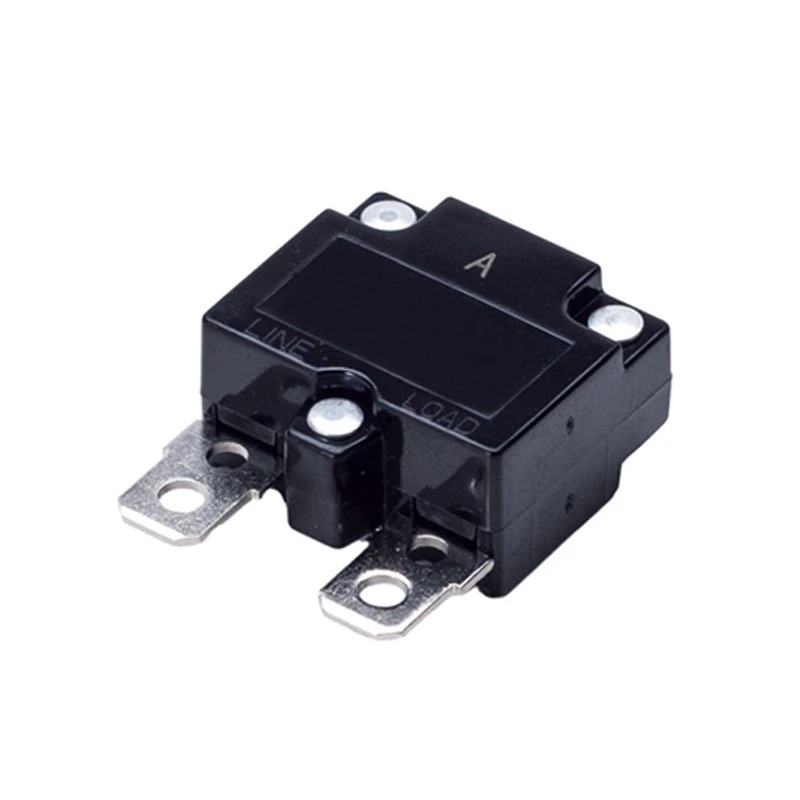
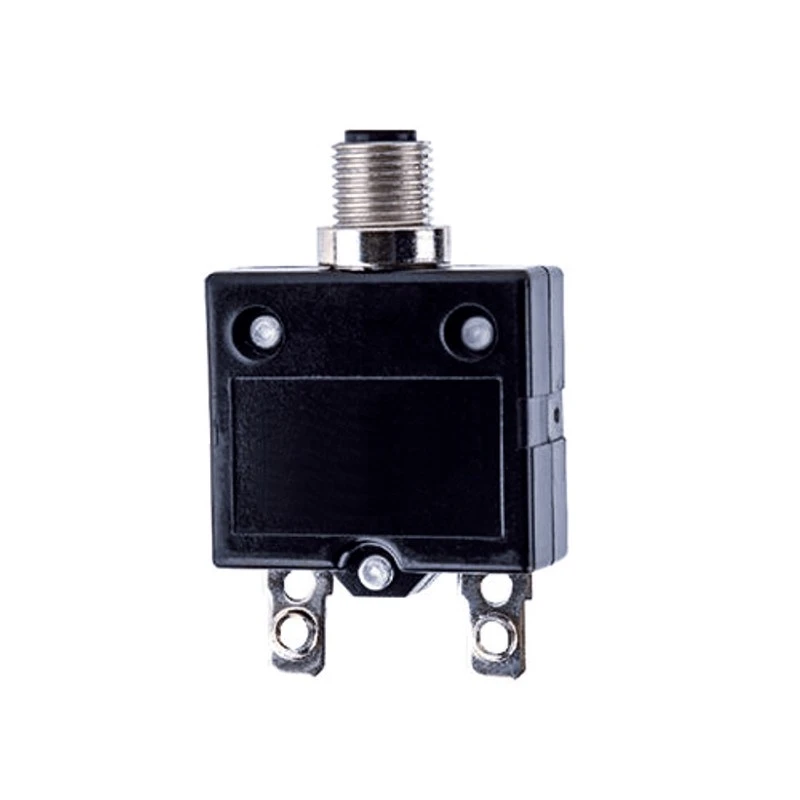
If you’ve ever stood in front of a sweltering refrigerator that won’t turn on, you’ve encountered the hidden hero keeping your compressor safe: the refrigerator thermal overload protector. As a supplier that’s worked with these components for years, I’ve seen firsthand how a basic understanding of their thermodynamic principles can help both service techs and homeowners get to the root of cooling issues fast. Let’s break down the science behind this small but critical part, why it matters for fridges, and how it works to protect one of the most used appliances in your home.
First, let’s start with the core job of a refrigerator’s compressor, since that’s what the overload protector is built to safeguard. The compressor is the heart of the fridge’s cooling system, working nonstop (or near-nonstop) to compress refrigerant gas, raise its temperature and pressure, and push it through the condenser coils to release heat. For the compressor to function properly, it needs a steady, controlled level of electrical current and temperature. When something goes wrong—like a power surge, a dirty condenser coil forcing the compressor to work too hard, or a mechanical issue that makes the motor drag—two problems arise: electrical current spikes and overheating. That’s where the thermal overload protector steps in. Its whole purpose is to shut down power to the compressor before either of these issues causes permanent damage.
Now, the thermodynamic principle at play here is simple but clever: it relies on the relationship between electrical resistance, heat generation, and the thermal expansion of metals. Let’s unpack that. All electrical components, when current flows through them, generate heat—this is Joule heating, right? The amount of heat is proportional to the square of the current times the resistance of the wire (Q = I²R, for anyone who remembers basic physics). Under normal operation, the compressor motor draws a predictable, low current, so the heat generated is managed by the fridge’s cooling system, and the overload protector stays out of the way. But when the motor is under stress, current can jump to two or three times its normal level, creating excess heat that can’t dissipate fast enough. The overload protector is calibrated to react to both this heat and the rise in current (though the thermal element is the thermodynamic core).
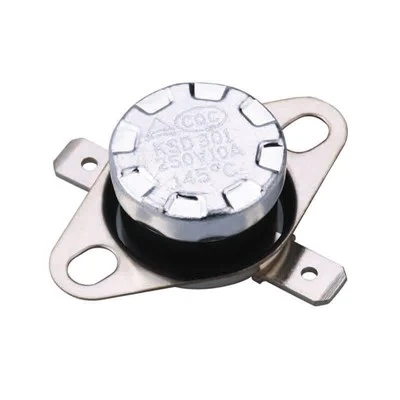
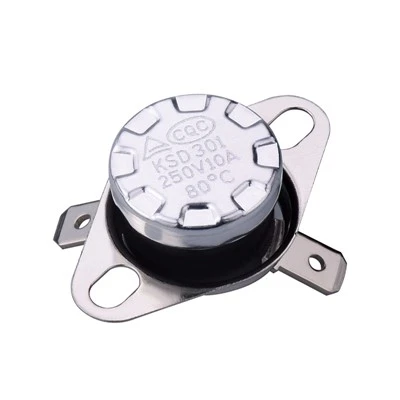
Most refrigerator thermal overload protectors use a bimetallic strip as their key component. A bimetallic strip is made by bonding two different metals with vastly different coefficients of thermal expansion—meaning one metal expands much more than the other when heated, and contracts more when cooled. When the strip is at its designed operating temperature (usually around 130°F to 150°F, depending on the model), it’s bent just enough to keep the circuit closed, so electricity flows to the compressor. But when excess heat from a current spike raises the strip’s temperature beyond that threshold, the two metals expand unevenly, causing the strip to bend sharply in the opposite direction. This bending breaks the electrical circuit, cutting power to the compressor immediately—no more heat, no more damage. Once the strip cools back down, it returns to its original shape, ready to reset the circuit. That’s the basic thermodynamic cycle that makes it work: heat from overload triggers thermal expansion of dissimilar metals, which interrupts power, and cooling reverses the expansion to restore function.
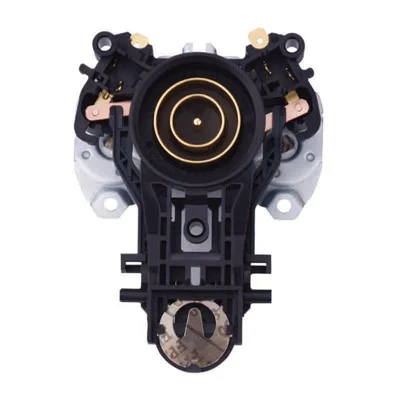
Wait, but not all thermal overload protectors work the same way. There’s also the positive temperature coefficient (PTC) thermistor, which is another common type used in some modern fridges. A PTC thermistor is a ceramic component whose electrical resistance increases drastically as its temperature rises. At normal operating temps, it has low resistance, so current flows freely to the compressor. When the compressor overheats, the thermistor’s resistance spikes thousands of times, blocking current entirely. The PTC works on a different thermodynamic principle than the bimetallic strip, but both serve the same core purpose: protecting the compressor from thermal damage. As a supplier, we often work with our customers to choose between these two types based on the fridge’s make, model, and the specific application—for example, the motor thermal overload protection switch we offer is designed to handle higher power loads, making it ideal for larger refrigerators or commercial coolers.
Let’s talk about a real-world example to make this concrete. Last winter, a customer emailed us saying their side-by-side fridge stopped cooling, and the compressor was humming loudly but not turning on. They checked the circuit breaker, which was fine, so they called a tech who tested the compressor: it wasn’t seized, but it wasn’t getting power. The tech pulled the overload protector off the compressor, and it had tripped—excess heat had warped the bimetallic strip so it couldn’t reset. When they replaced it with the correct refrigerator thermal overload protector, the compressor turned on, and the fridge worked perfectly again. That’s exactly how this component is supposed to work: it trips to prevent a full compressor burn-out, which would cost hundreds of dollars to replace versus a $20 overload protector.
Now, you might be wondering, why not just use a regular fuse or circuit breaker for this job? The answer is timing. A standard circuit breaker in your home is designed to trip on large, short-term surges (like a lightning strike), but it’s too slow to react to the gradual, steady overheating that a fridge compressor experiences when it’s working too hard. For example, if a fridge’s condenser coil gets covered in dust, the compressor has to run 20% longer to keep the interior cold. Over an hour, that generates enough heat to damage the motor’s windings, but the home circuit breaker won’t trip because the current only rises 15% above normal. The thermal overload protector, mounted directly on the compressor (so it’s exposed to the exact same heat the motor is generating), senses that gradual heat rise instantly and trips before damage occurs. That direct, close-proximity sensing is what makes thermodynamics the perfect foundation for this part—it’s not just measuring current, it’s measuring the actual thermal state of the component it’s protecting.
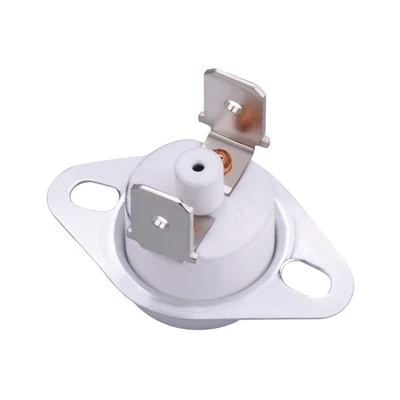
Another thing that’s important to understand is the difference between manual-reset and automatic-reset overload protectors, because that ties directly to their use case. Automatic-reset protectors will reset on their own once the component cools down, which is fine for small residential fridges where the overheating is usually temporary. But for larger units, like commercial refrigerators or deep freezers, a manual-reset overload protector is often better. If the overload trips during the night, an automatic one might turn the compressor back on while the condenser is still dirty, leading to another trip or even permanent damage. A manual-reset overload protector requires a technician to press a button to reset it, making sure the underlying issue (a dirty coil, a faulty fan, etc.) is fixed first. We’ve seen this distinction matter a lot for our customers, so we always share resources on when to use which type—check out our manual-reset overload protector page for more details on that.
Let’s dive deeper into the thermodynamics of the bimetallic strip, since that’s the most common design for fridge protectors. Let’s say we use steel and brass for the strip. Brass has a higher coefficient of thermal expansion than steel—so when heated, brass expands more. The strip is bonded with steel on one side and brass on the other, so when it warms up, the brass side gets longer, making the strip bend toward the steel side. We calibrate the strip’s thickness, length, and the ratio of the two metals so that at exactly the trip temperature, the bend is enough to push a small contact arm away from the electrical terminal, breaking the circuit. When the compressor’s heat source is removed, the strip cools, the brass contracts back to its original length, and the strip straightens out, allowing the contact to reconnect. This whole process is reversible and repeatable—thousands of times, over the lifespan of the protector—without wearing out, as long as it’s not exposed to extreme temperatures beyond its calibration range.
What causes an overload trip in the first place, beyond the obvious power surges? Let’s list the most common triggers that service techs see every day: a dirty condenser coil blocking heat transfer, a faulty condenser fan that can’t blow air over the coils, a compressor that’s wearing out and drawing more current, a blocked refrigerant line that makes the compressor work harder, or even a fridge that’s overstuffed, so the door is opened too often and the compressor runs nonstop. In each of these cases, the compressor’s internal temperature rises, and the heat conducts through the compressor shell to the mounted overload protector. That’s why placing the protector directly on the compressor is non-negotiable—if it was mounted further away, it would sense heat too late, after the motor windings have already sustained damage.
For a lot of people, the overload protector is a “set-it-and-forget-it” part, but it’s worth noting that it does have a lifespan. Most manufacturers recommend replacing it every 5 to 7 years, or whenever the compressor is serviced. The bimetallic strip can fatigue over time from repeated heating and cooling cycles, losing its calibration, so it might not trip when it should (leading to compressor damage) or trip unnecessarily (leading to frequent shutdowns). That’s why having a reliable supplier of high-quality protectors is important—cheap, uncalibrated parts can do more harm than good.
If you’re in the market for a new thermal overload protector, whether you’re a service tech working on dozens of fridges a month or a homeowner doing a quick repair, it’s critical to get the right part for your model. Fridge protectors are not one-size-fits-all—different compressor models have different current ratings and trip temperatures. That’s where our experience comes in. We stock a wide range of protectors tailored to specific refrigerator brands and compressors, including the three phase motor thermal protector for larger commercial units that run on three-phase power. Our refrigerator thermal overload protector page has detailed specifications to help you find the exact part you need, with no guesswork.
Let’s wrap this up by circling back to the core thermodynamic principle that makes all this work. The refrigerator thermal overload protector is a perfect example of how basic physics—thermal expansion, Joule heating, the relationship between current and heat—translates to real-world appliance reliability. It’s not just a safety part; it’s a component that’s engineered to prevent costly damage by responding to the exact conditions that would destroy a compressor. As someone who’s spent years in this industry, I can tell you that understanding this principle is the first step to troubleshooting fridge cooling issues, whether you’re a tech on a service call or a homeowner trying to diagnose a small problem before it becomes a big one.
If you’re in need of reliable, calibrated thermal overload protectors for refrigerators or other applications, our team is here to help you find the right solution for your needs. We work with residential repair services, commercial appliance companies, and component distributors to provide high-quality parts at competitive prices. Whether you need a single replacement part for a repair job or bulk quantities for a production line, we can support you. Reach out to our team to discuss your requirements and get more information on our products.
References
- Halliday, D., Resnick, R., & Walker, J. (2021). Fundamentals of Physics (12th ed.). Wiley.
- ASHRAE. (2022). ASHRAE Handbook: Refrigeration (2022 ed.). American Society of Heating, Refrigerating and Air-Conditioning Engineers.
- White, F. M. (2016). Heat Transfer (8th ed.). McGraw-Hill.